Ebola Outbreak in Congo Sparks Urgent Global Response as Health Workers Race to Contain Crisis
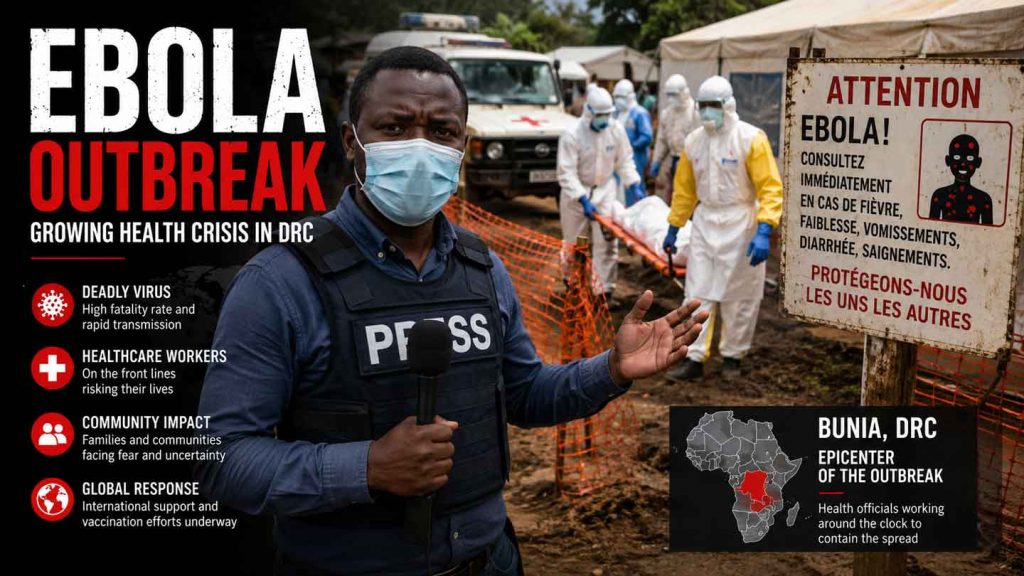
Ebola Outbreak
Ebola Outbreak in Congo Sparks Urgent Global Response as Health Workers Race to Contain Crisis
Reporter Reveals Dire Conditions at the Epicenter of the Ebola Outbreak
The ongoing Ebola outbreak in the Democratic Republic of the Congo (DRC) has raised serious concerns among global health organizations as the number of confirmed cases continues to climb. According to reports from the region, more than 350 cases have been identified across the DRC and neighboring Uganda, while the death toll has surpassed 60 people. Health agencies, aid workers, and local authorities are now engaged in a desperate effort to contain the spread of the deadly virus before it escalates further.
Journalist Declan Walsh, reporting from the heart of the outbreak, provided a firsthand account of the devastating conditions inside an Ebola treatment ward located in the mining town of Mangena, believed to be the epicenter of the crisis.
Overwhelmed Hospitals Struggle to Manage Ebola Cases
During his visit to a public hospital in the affected region, Walsh described a healthcare system pushed beyond its limits. Medical staff faced severe shortages of protective equipment, while hospitals struggled to accommodate the growing number of patients.
One of the most alarming scenes involved a young boy suffering from severe bleeding symptoms, lying on a bare mattress with minimal medical support. Nearby, the body of a woman who had died from the disease remained in the ward, covered only by a sheet.
Health experts warn that the bodies of Ebola victims remain highly contagious after death, making proper handling and burial procedures essential to preventing further transmission. Such conditions highlight the immense challenges faced by frontline healthcare workers trying to control the outbreak with limited resources.
Rare Ebola Strain Delayed Early Detection
Officials believe the outbreak may have begun as early as February but was not officially declared until May. A key factor behind the delayed response was the identification of the virus strain responsible for the outbreak.
The current epidemic is linked to the Bundibugyo strain of Ebola, a rare variant that has only caused a small number of outbreaks in the past. Initially, regional laboratories tested samples for the more common Zaire strain of Ebola, resulting in a critical delay in diagnosis.
Samples eventually had to be sent to the national laboratory in Kinshasa for further analysis, where the Bundibugyo strain was confirmed. By the time authorities recognized the true nature of the outbreak, hundreds of suspected infections had already emerged.
This delay significantly hindered containment efforts and allowed the virus to spread deeper into local communities.
International Aid Efforts Intensify
In response to the escalating crisis, international aid organizations and public health agencies have accelerated their support operations. Emergency medical supplies, protective equipment, and specialized personnel are being transported into affected areas.
Organizations such as Doctors Without Borders have established isolation units to treat infected patients and reduce community transmission. Airports in regional centers have become hubs for incoming relief flights carrying essential resources.
Despite these efforts, health officials emphasize that major challenges remain. Testing capacity is still limited, making it difficult to determine the true scale of the outbreak and identify infected individuals quickly enough to prevent further spread.
Community Distrust Complicates Ebola Response
Beyond the medical challenges, public health officials face another significant obstacle: widespread mistrust among local populations.
Some residents remain skeptical about the existence of Ebola, while others believe misinformation and conspiracy theories suggesting that the outbreak is being exaggerated or fabricated by health authorities and foreign aid groups.
This distrust has led to incidents of violence, including attacks on isolation facilities and assaults on Red Cross teams conducting safe burials for Ebola victims. Such actions place healthcare workers at risk and make containment efforts even more difficult.
Public education campaigns are now considered a critical component of the response strategy. Health experts stress that increasing awareness about Ebola symptoms, transmission methods, and prevention measures will be essential to gaining community cooperation.
Race Against Time to Contain the Virus
Medical experts agree that containing the Ebola outbreak will require a coordinated international effort involving governments, humanitarian organizations, healthcare workers, and local communities.
While progress has been made since the outbreak was officially declared, authorities acknowledge that they are still trying to catch up with a rapidly spreading virus. The focus remains on expanding testing, improving treatment facilities, strengthening surveillance systems, and building trust among affected populations.
As health agencies continue their response, the situation in the Democratic Republic of the Congo serves as a stark reminder of the devastating impact infectious diseases can have when early detection and rapid intervention are delayed.
#Ebola #EbolaOutbreak #Congo #DRC #GlobalHealth #PublicHealth #HealthCrisis #InfectiousDiseases #AfricaNews #MedicalEmergency #DiseaseOutbreak #HealthNews #DoctorsWithoutBorders #WorldNews #HealthcareWorkers