Iran Warns of Retaliation as US Expands Military Presence in Middle East
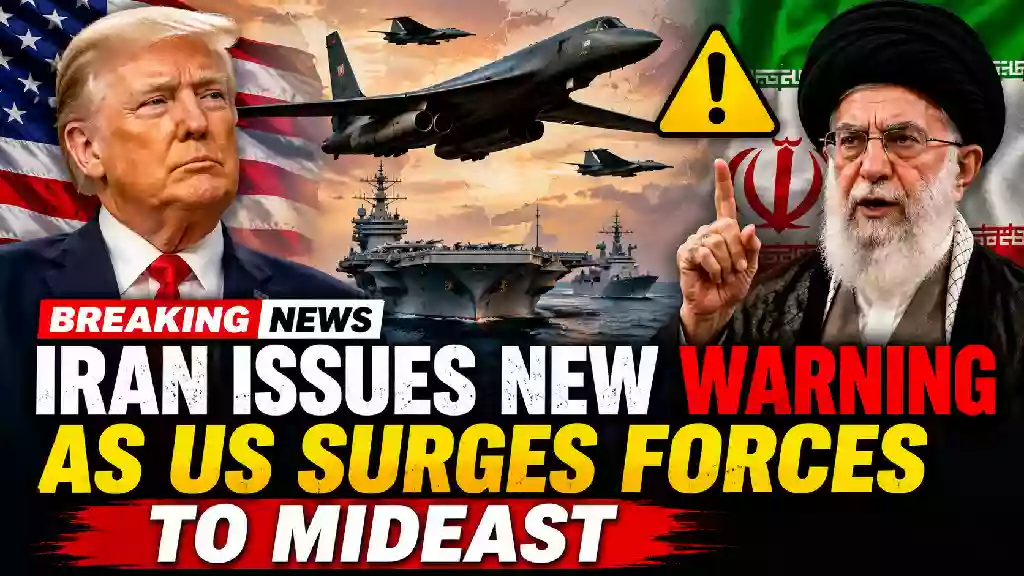
A YouTube thumbnail depicting President Donald Trump and Iran's Supreme Leader Ayatollah Ali Khamenei amid escalating U.S.-Iran tensions. The artwork features a B-1 bomber, U.S. naval forces, and military aircraft to illustrate America's reinforced military presence in the Middle East after Iran warned of a "powerful and decisive" response to any aggression.
Iran Warns of Retaliation as US Expands Military Presence in Middle East
Former Trump Adviser Says Increased US Deployments Strengthen Regional Deterrence
The United States is increasing its military presence in the Middle East as tensions with Iran remain high, prompting fresh warnings from Tehran that any attack on its territory or infrastructure would be met with a “powerful and decisive” response. The developments come amid continued concerns over regional security, maritime trade routes, and the potential for further escalation between Washington and Tehran.
During a televised interview, former Deputy Assistant to President Donald Trump Robert Greenway said the deployment of additional U.S. aircraft, personnel, and a reported B-1 bomber to the region reflects Washington’s effort to strengthen deterrence and maintain military readiness following recent hostilities. He argued that diplomatic efforts with Iran have reached an impasse, leaving military preparedness as the primary means of protecting U.S. interests and allies.
Iran Vows “Powerful and Decisive” Response
Iran’s foreign minister warned that any aggression against the country would trigger retaliation, stating that attacks on Iranian infrastructure would receive a “powerful and decisive response.” He also warned that countries providing support for such actions could be considered legitimate targets.
The warning underscores the increasingly confrontational rhetoric between Tehran and Washington as military activity in the region continues to intensify.
Greenway: Iran’s Military Capabilities Have Been Reduced
Greenway argued that recent military operations have significantly weakened Iran’s military leadership and reduced its operational capabilities. While acknowledging that Iran still possesses ballistic missiles and launch systems, he said the country no longer has the same level of military capacity it once maintained.
He also noted that missile defense systems cannot intercept every incoming projectile but maintained that the United States retains overwhelming military capabilities should additional military action become necessary. According to Greenway, Iran’s remaining missile inventory poses a continuing concern, although he believes its overall military strength has been diminished.
Strait of Hormuz Remains a Strategic Flashpoint
The interview highlighted the strategic importance of the Strait of Hormuz, one of the world’s busiest energy shipping corridors. Greenway said preventing disruptions to commercial shipping remains a priority for the United States and suggested that additional military operations could be considered if Iran or its regional allies threaten maritime traffic.
He also referenced previous U.S. operations targeting the capabilities of the Iran-backed Houthis in Yemen, describing them as an example of Washington’s willingness to respond to threats against international shipping.
Saudi Nuclear Proposal Tied to Abraham Accords
The discussion also focused on President Donald Trump’s comments regarding a proposed civil nuclear agreement with Saudi Arabia. According to the president, the agreement would allow only non-military nuclear energy development without uranium enrichment and would be contingent upon Saudi Arabia joining the Abraham Accords.
Greenway described the proposal as a strategic opportunity to strengthen regional partnerships while maintaining safeguards against nuclear weapons development. He said expanding the Abraham Accords remains an important objective for long-term stability in the Middle East.
Questions Remain Over Lebanon’s Security Situation
Greenway also addressed the possibility of restoring direct commercial flights between the United States and Lebanon after decades without regular service. While calling the move encouraging, he said its success would depend on Lebanon’s ability to implement effective security measures, noting Hezbollah’s long-standing influence over portions of the country’s transportation infrastructure.
Regional Tensions Continue
The latest military deployments and diplomatic developments illustrate the fragile security environment across the Middle East. As the United States reinforces its regional presence and Iran continues to issue warnings of retaliation, officials and analysts remain focused on preventing further escalation while balancing military deterrence with ongoing diplomatic efforts. The coming weeks could prove significant as regional alliances, security initiatives, and military posturing continue to shape the broader geopolitical landscape.
#Iran #MiddleEast #USMilitary #BreakingNews #WorldNews #Trump #Geopolitics #Defense #StraitOfHormuz #SaudiArabia