US Tightens Economic Pressure on Iran as Former CENTCOM Chief Urges Broader Financial Crackdown
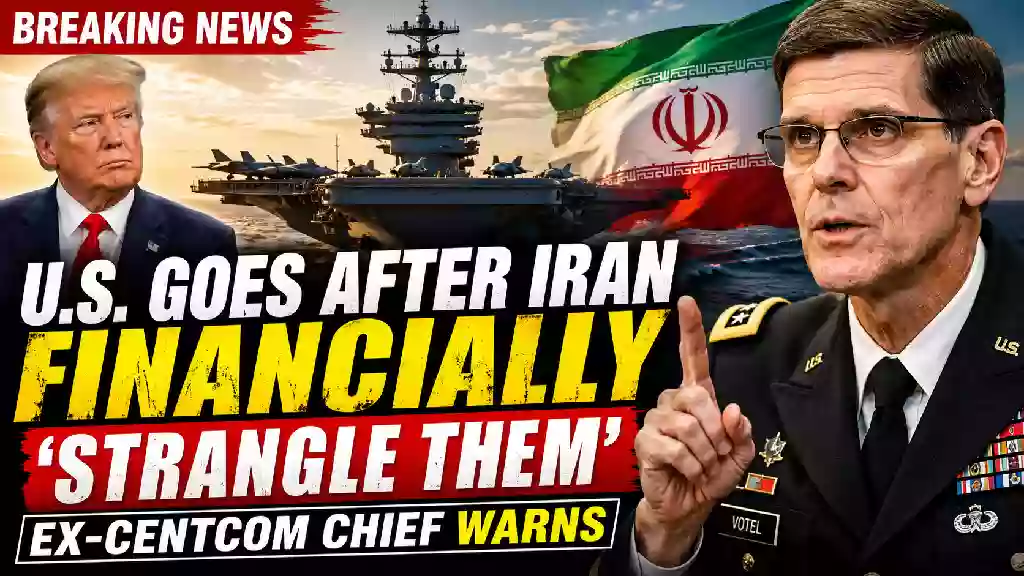
U.S. intensifies economic pressure on Iran as former CENTCOM commander Joseph Votel urges stronger action against Iranian financial networks.
US Tightens Economic Pressure on Iran as Former CENTCOM Chief Urges Broader Financial Crackdown
Washington Targets Iran’s Financial Networks as Military Presence Grows in the Middle East
The United States is intensifying economic pressure on Iran, with a former commander of U.S. Central Command calling for a broader effort to cut off the financial networks that continue to support Tehran.
Retired four-star General Joseph Votel said Washington will need to target the money flowing to the Iranian regime while maintaining a strong military presence in the Middle East. His comments come as the USS George Washington arrives in the region to replace the USS Abraham Lincoln after more than 270 days at sea.
The developments come amid a wider U.S. campaign aimed at increasing economic pressure on Iran. Recent reporting says the Trump administration has announced plans for tougher sanctions, with officials warning that the new measures could significantly expand pressure on Tehran and countries that continue doing business with it.
Former CENTCOM Commander Calls for Financial Pressure
Votel described the strategy as an effort to financially “strangle” Iran by targeting the economic resources that help sustain the government.
He argued that economic pressure should not be limited to Iran itself. According to Votel, Washington may also need to pursue banks, businesses and governments that provide financial or commercial support to Tehran.
The former CENTCOM commander said maintaining credible military capabilities will remain important because an economic campaign could take considerable time. U.S. forces, he said, must remain ready to support enforcement measures and respond if the situation develops further.
Oil Smuggling and Financial Channels in Focus
One of the biggest challenges for Washington is preventing Iran from using alternative channels to generate revenue despite sanctions.
Votel specifically identified oil smuggling, currency swaps, cash transfers and ship registries as areas that could come under greater scrutiny. He said the United States should be prepared to pursue virtually every dollar supporting the Iranian government.
Targeting these networks could make it more difficult for Tehran to move money internationally, sell oil through covert channels or rely on businesses and financial institutions willing to work around U.S. restrictions.
The approach reflects a broader strategy of using economic pressure to limit Iran’s ability to finance its government and maintain its regional activities.
U.S. Military Presence Remains Critical
Despite the emphasis on financial pressure, Votel stressed that military readiness remains an important part of the strategy.
The arrival of the USS George Washington provides an example of the U.S. military capability being maintained in the region. Votel said American forces must remain at a high level of readiness and be prepared to support economic enforcement or undertake other actions if necessary.
The combination of economic restrictions and military preparedness creates a two-track approach: Washington seeks to weaken Iran financially while maintaining the military capability needed to deter or respond to potential escalation.
International Cooperation Could Determine Success
Votel also emphasized that the United States will need cooperation from international partners.
He said the campaign requires coordination across the U.S. government as well as strong communication and planning with countries in the Middle East and elsewhere.
That could prove particularly important because Iran’s financial and commercial networks extend beyond its borders. Efforts to restrict Iranian oil sales, shipping activity and financial transactions could involve companies and institutions in multiple countries.
The administration’s broader campaign has already raised concerns about the potential consequences for countries and businesses that continue trading with Iran.
Votel Warns the Strategy Will Take Time
Votel cautioned that economic pressure is unlikely to produce immediate results. He stressed the importance of political patience, consistent communication and a clear explanation of Washington’s objectives.
Iran has reportedly dismissed the administration’s “economic D-Day” campaign as a diversion. Votel, however, argued that Tehran should regard the pressure as a serious threat.
He also pointed to the influence of former Islamic Revolutionary Guard Corps personnel within Iran’s leadership, suggesting that the government could be prepared to withstand significant pressure.
Economic Pressure Could Increase Pressure Inside Iran
A major part of the strategy is the expectation that sustained economic pressure could eventually create greater difficulties for Iran’s government.
Votel described the Iranian population as a potential vulnerability, arguing that worsening economic conditions could eventually increase pressure on the regime to respond.
The challenge for Washington will be maintaining pressure without triggering a wider escalation. With sanctions, financial restrictions and military deployments all playing a role, the U.S.-Iran confrontation is increasingly becoming a contest of economic endurance as well as military strength.
For now, the Trump administration appears determined to intensify the financial squeeze on Tehran, while Votel’s assessment suggests that success will depend on sustained enforcement, international cooperation and the ability to maintain pressure over the long term.
#Iran #USIran #IranSanctions #USSanctions #JosephVotel #CENTCOM #MiddleEast #IranEconomy #OilSmuggling #IRGC #Geopolitics