Andre Dickens Slams DNC After Atlanta Rejected for 2028 Convention Warns Democrats Are Losing Black Voters

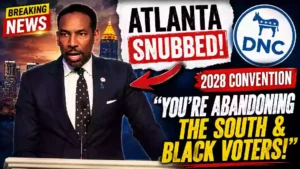
Political news graphic highlighting Atlanta's removal from consideration for the 2028 Democratic National Convention and criticism of the DNC's decision.
Andre Dickens Slams DNC After Atlanta Rejected for 2028 Convention Warns Democrats Are Losing Black Voters
Atlanta Mayor Explodes Over DNC Snub: You’re Abandoning the South and Black Voters
Atlanta Mayor Andre Dickens is taking aim at Democratic National Committee leaders after Atlanta was eliminated from consideration to host the 2028 Democratic National Convention, accusing the party of overlooking the South and taking Black voters for granted.
The DNC narrowed its list of potential host cities to Boston, Denver and Philadelphia, leaving Atlanta and Chicago out of the final group. Party officials have not publicly explained why either city was eliminated.
For Dickens, the decision represents more than a lost opportunity to host a major political event. He argues that it raises questions about how national Democratic leaders view Atlanta, Georgia and the broader Southern electorate.
Andre Dickens Blasts DNC Decision
In a sharply worded letter to DNC Chairman Ken Martin, Dickens criticized the party for failing to keep Atlanta among the finalists.
The mayor argued that Atlanta has played an important role in Democratic politics and remains a critical center of Black political and economic influence. He accused the DNC of abandoning Atlanta, the South and Black voters.
The criticism comes as Democrats prepare for the 2026 midterm elections and look ahead to the 2028 presidential race. Georgia has emerged as one of the nation’s most closely watched battleground states, making the dispute especially significant.
Why Atlanta Matters to Democrats
Atlanta’s political importance extends far beyond Georgia. The city sits at the center of a region where Black voters have historically played a major role in Democratic electoral coalitions.
Dickens’ argument is that excluding Atlanta from consideration for the 2028 Democratic convention sends the wrong political message at a time when Democrats need to maintain strong relationships with voters across the South.
The mayor’s letter argued that the DNC’s decision suggested national party leaders did not consider Atlanta or Georgia sufficiently important to the party’s future.
Atlanta has not hosted a Democratic convention since 1988. The latest decision means the 2028 convention will instead be held in one of three finalists: Boston, Denver or Philadelphia.
Democrats Push Back on the “Abandoning Black Voters” Argument
Not everyone agrees with Dickens’ assessment.
In the discussion reflected in the source material, former Biden White House adviser Yamiche Aguilera acknowledged the frustration surrounding Georgia but rejected the idea that Democrats are abandoning Black voters.
Aguilera pointed to the Democratic presidential primary calendar and the party’s decision to place South Carolina early in the schedule. She argued that South Carolina’s large Black electorate was an important consideration and that the decision should not automatically be interpreted as Democrats turning away from Black voters.
The disagreement illustrates a larger debate inside the Democratic Party about how it should maintain support among Black voters while expanding its coalition in competitive states.
Michigan Highlights Another Democratic Challenge
Michigan is another state where Democrats are facing questions about their relationship with Black voters.
The discussion referenced Al Sayed’s efforts to appeal to Black voters and highlighted the importance of building long-term relationships rather than relying primarily on campaign advertising or outside spending.
The source also pointed to differences between primary and later polling involving Black voters in Michigan, illustrating how voter preferences can shift during an election cycle.
Democratic Party Faces an Ideological Debate
The Atlanta controversy comes amid a broader argument over the direction of the Democratic Party.
The source discussion described skepticism among some traditional Democratic voters toward what commentators characterized as an increasingly socialist direction within parts of the party. Democratic leaders face pressure to balance progressive activists with more moderate voters, particularly in competitive states.
That challenge could become increasingly important as Democrats look toward the midterms and the 2028 presidential election.
Republicans See an Opening
The debate over Black voters could also create an opportunity for Republicans.
The source material points to Republican efforts to reach voters who have traditionally supported Democrats, including working-class, Hispanic and Black voters.
Commentator Katie Zachariah argued that Republicans should develop more deliberate messaging aimed at Black voters instead of assuming those voters will remain automatically aligned with Democrats.
The argument reflects a broader reality of modern American politics: voters who were once considered reliably attached to one party are increasingly being targeted by both sides.
Atlanta Snub Adds Pressure on Democrats
The DNC’s decision to remove Atlanta from the 2028 convention competition has opened another conversation about the Democratic Party’s relationship with the South.
For Dickens, the issue is about whether national Democratic leaders recognize Atlanta’s importance to the party’s coalition. For other Democrats, the decision does not necessarily indicate a rejection of Black voters and may instead reflect logistical, fundraising and strategic considerations surrounding the convention.
What happens next could matter beyond the convention itself. As Democrats prepare for the midterms and eventually the 2028 presidential campaign, maintaining support among Black voters and competing effectively in Georgia will remain central to the party’s national strategy.
The Atlanta controversy therefore represents more than a dispute over a convention venue. It has become another test of how Democrats define their coalition, where they see their strongest political opportunities and how seriously they take the South heading into the next presidential cycle.
#AndreDickens #Atlanta #DNC #DemocraticParty #BlackVoters #GeorgiaPolitics #Georgia #2028DNC #MidtermElections #USPolitics #Election2026