Suspected Cyberattack on Minnesota Water Systems Exposes America’s Aging Infrastructure
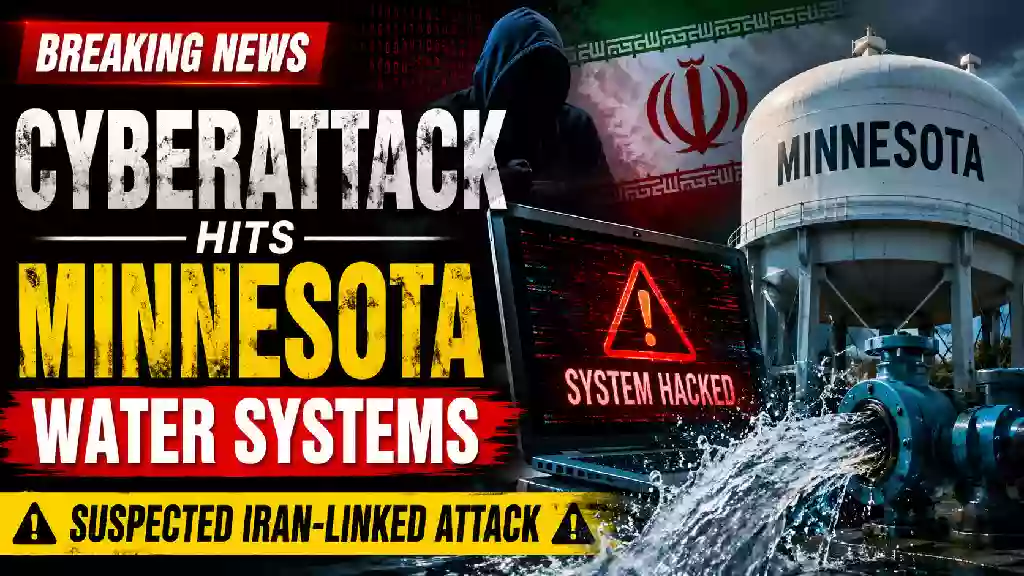
A dramatic news graphic depicts a suspected cyberattack affecting Minnesota water systems, highlighting cybersecurity threats to aging U.S. critical infrastructure as federal investigators examine the incident.
Suspected Cyberattack on Minnesota Water Systems Exposes America’s Aging Infrastructure
Experts Warn Outdated Technology Leaves US Utilities Vulnerable to Foreign Cyber Threats
A suspected cyberattack targeting dozens of community water systems in Minnesota has intensified concerns about the security of America’s aging critical infrastructure. While investigators believe the incident bears the hallmarks of previous cyber operations linked to Iran, officials have not publicly confirmed who was responsible as the federal investigation continues.
The disruption affected more than 30 community water systems, prompting one Minnesota city to temporarily shut down its water treatment plant before operators restored service using backup controls. Although officials say the impact on residents was limited, cybersecurity specialists warn the incident underscores the growing risks facing outdated utility systems across the United States.
Water Facilities Experience Coordinated System Failures
According to officials, the incident began when water plant operators noticed equipment behaving unexpectedly. A water tower requested additional water, but the connected well system failed to respond properly despite receiving electrical power.
As operators investigated, they discovered neighboring municipalities were experiencing similar problems. Plant personnel manually overrode automated controls and switched to backup operations, allowing water service to continue with minimal disruption.
Investigators have released few technical details but said the attack shared similarities in timing, methods, system access, and target selection with previous cyber campaigns believed to have originated from Iranian threat actors. The FBI has confirmed it is working with affected communities while the investigation remains ongoing.
Experts Say Attack Shows Signs of State-Sponsored Activity
Cybersecurity experts interviewed following the incident said the absence of a ransom demand distinguishes the attack from typical ransomware operations carried out by financially motivated criminal groups.
David Kennedy, founder of cybersecurity firms TrustedSec and Binary Defense, said Iran has historically focused on targeting water treatment facilities and other civilian infrastructure. He noted that investigators often examine attack patterns, operational methods, and overall objectives when evaluating whether an incident may be linked to a nation-state rather than organized cybercrime.
Kennedy said these indicators have led many investigators to believe the attack is consistent with previous operations attributed to Iranian hackers, though government officials have not formally announced attribution.
Legacy Infrastructure Remains a Growing Cybersecurity Challenge
The incident has renewed debate over the condition of America’s critical infrastructure, much of which relies on decades-old technology.
According to cybersecurity experts, many municipal water systems continue operating with equipment originally installed during the 1960s, 1970s, and 1980s. Modernizing these systems often requires millions of dollars in funding, placing many smaller communities at a disadvantage when defending against increasingly sophisticated cyber threats.
Experts also noted that many local governments have limited cybersecurity resources, with some municipalities relying on only a small IT staff to manage entire public networks.
Artificial Intelligence Expanding Cyber Risks
Cybersecurity professionals warn that advances in artificial intelligence are making sophisticated cyberattacks easier to execute. Techniques once requiring highly specialized expertise are becoming increasingly accessible, allowing more threat actors to target vulnerable infrastructure.
This evolving threat landscape extends beyond water treatment facilities. Experts say power grids, healthcare systems, transportation networks, and supply chain infrastructure remain attractive targets for foreign adversaries seeking to disrupt essential public services.
They argue that strengthening cybersecurity defenses has become increasingly important as geopolitical tensions continue to evolve.
Officials Urge Increased Investment in Infrastructure Security
The Minnesota incident has prompted renewed calls for greater investment in cybersecurity across local and regional utilities. Experts say aging infrastructure, combined with limited cybersecurity funding, creates opportunities for attackers to exploit weaknesses in essential public systems.
Although operators successfully restored normal operations and disruptions remained limited, cybersecurity professionals describe the incident as an important warning that critical infrastructure requires continued modernization and stronger digital protections.
Federal authorities continue investigating the attack, and officials have not released additional technical findings or formally identified those responsible.
Growing Focus on Protecting Critical Infrastructure
As cyber threats become more sophisticated, experts say protecting essential public services will require cooperation among federal agencies, state governments, local utilities, and private-sector organizations.
The Minnesota water system incident serves as a reminder that even limited disruptions can expose significant vulnerabilities in aging infrastructure. While investigators continue examining the attack, cybersecurity professionals emphasize that proactive investment in modern technology and stronger defenses will play a crucial role in reducing future risks.
#CyberSecurity #Minnesota #CyberAttack #CriticalInfrastructure #WaterSystems #NationalSecurity #Infrastructure #CyberDefense #BreakingNews #PublicUtilities