Iran Demands Concessions as US Pushes to Reopen Strait of Hormuz
Iran's reported demands for reopening the Strait of Hormuz put pressure on ongoing U.S.-Iran negotiations as concerns grow over energy security and regional tensions.
Iran Demands Concessions as US Pushes to Reopen Strait of Hormuz
Tehran Links Strait of Hormuz Reopening to US Demands
Iran is reportedly making a series of demands before agreeing to fully reopen the Strait of Hormuz, adding another major obstacle to ongoing negotiations with the United States and increasing concerns about the future of a critical global energy route.
According to the source material, Vice President JD Vance said negotiations with Iran have made progress in recent days as the United States seeks a deal that would allow the strategic waterway to fully reopen. However, Iran is reportedly insisting that several conditions must be met before normal access can resume.
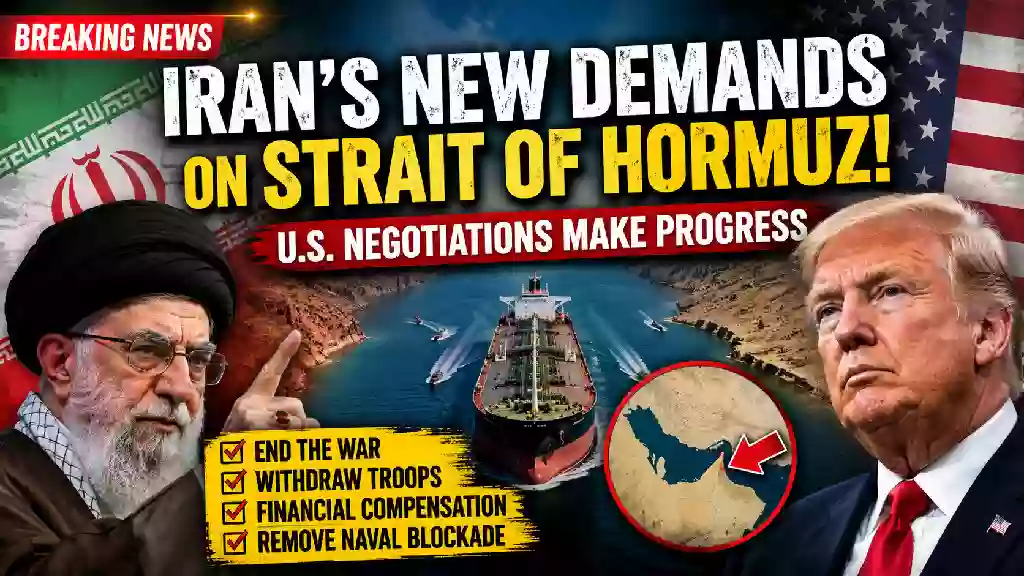
The reported demands include an end to the war, the withdrawal of U.S. troops, financial compensation and the removal of the naval blockade. Those conditions could make an agreement significantly more difficult as Washington weighs the reopening of the waterway against broader national security concerns.
Strait of Hormuz Becomes Key Point in Negotiations
The Strait of Hormuz has emerged as one of the most important issues in the negotiations because of its significance to the global energy market.
The source notes that any continued restriction on the waterway could affect fuel prices and create broader changes in international energy markets. Disruptions in the Strait could therefore have consequences far beyond the Middle East.
For American consumers, the impact could potentially appear through higher fuel prices and increased energy costs. The interview stressed that developments involving the Strait of Hormuz are not simply a distant geopolitical issue because disruptions to major energy routes can affect markets internationally.
The economic stakes are adding pressure to negotiations as both sides attempt to determine whether a broader agreement is possible.
Huckabee Warns Iran Remains a Major Security Concern
U.S. Ambassador to Israel Mike Huckabee said the Strait of Hormuz dispute should be viewed as part of a much larger confrontation involving Iran’s military capabilities and nuclear ambitions.
Huckabee argued that previous pressure against Tehran has not yet resulted in the behavioral changes sought by the United States and Israel. He characterized Iran’s leadership as a regime willing to absorb significant economic and military pressure rather than make concessions based solely on domestic considerations.
At the same time, Huckabee said Iran has been weakened by recent actions, including setbacks to its ability to produce a nuclear weapon.
However, he warned that Iran’s missile capabilities remain a significant concern.
Iran’s Missile Capability Draws Attention
One of the most serious claims discussed in the interview involved the reported growth of Iran’s ballistic missile range.
Huckabee said Iran’s missile capability had increased from approximately 2,000 kilometers to more than 4,100 kilometers within one year. He argued that such a range would place several major European cities within potential reach.
The ambassador cited cities including London, Paris, Berlin and Rome while warning that the United States must continue preparing for the possibility of increasingly sophisticated long-range missile threats.
These comments underscore why the negotiations extend beyond the immediate question of shipping through the Strait of Hormuz. Iran’s nuclear program, missile arsenal and regional military posture remain central concerns for U.S. policymakers.
U.S. Missile Defense Efforts Also in Focus
The interview also addressed the Pentagon’s planned testing of the space-based Golden Dome missile defense program.
Huckabee described the initiative as part of a defensive strategy designed to counter future missile threats. He compared the concept with Israeli missile defense systems, including Iron Dome, David’s Sling and Arrow 3.
He also pointed to Israel’s experience intercepting incoming ballistic missiles during recent fighting. According to Huckabee, 92% of incoming ballistic missiles were intercepted during six and a half weeks of war, while those that were not intercepted caused minimal damage.
The comments reflect the growing emphasis Washington is placing on missile defense as missile technology develops.
What Happens Next in the Strait of Hormuz?
The future of the Strait of Hormuz remains uncertain as U.S.-Iran negotiations continue.
While Vice President Vance has indicated that progress has been made, Iran’s reported conditions could complicate efforts to reach a final agreement. The United States must balance the immediate importance of reopening the waterway with longer-term concerns involving Iran’s nuclear capabilities, missile program and regional security posture.
For now, the negotiations remain unresolved. But the stakes extend well beyond the negotiating table. Any prolonged disruption involving the Strait of Hormuz could affect global energy markets, fuel prices and international security.
As talks continue, the central question will be whether Washington and Tehran can overcome their differences and reach an agreement that allows the strategically important waterway to fully reopen.
#Iran #StraitOfHormuz #USIran #MiddleEast #IranConflict #EnergySecurity #OilPrices #NationalSecurity #IranNuclearProgram