HUD Secretary Scott Turner Praises Oklahoma City Program as National Model for Helping Homeless Youth
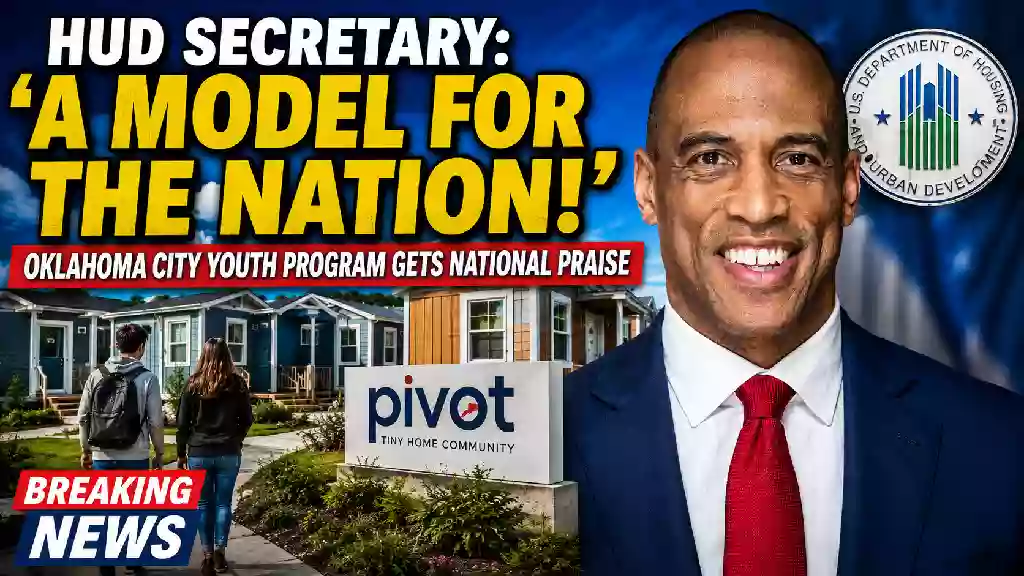
U.S. Housing and Urban Development Secretary Scott Turner, whose visit to Oklahoma City brought national attention to the Pivot program supporting homeless and at-risk youth.
HUD Secretary Scott Turner Praises Oklahoma City Program as National Model for Helping Homeless Youth
Oklahoma City’s Pivot Program Gains National Attention as HUD Pushes New Approach to Youth Homelessness
OKLAHOMA CITY, Okla. — A local program helping homeless and at-risk young people in Oklahoma City is gaining national recognition after U.S. Housing and Urban Development Secretary Scott Turner visited the community and praised its approach as a potential model for communities across the country.
Turner toured Pivot, a nonprofit organization that provides housing and support services to young people ages 16 to 24. During his visit, he viewed the organization’s tiny home community and other resources designed to help young people facing homelessness move toward greater stability.
Pivot Combines Housing With Support Services
Pivot’s approach goes beyond providing a place to sleep. The Oklahoma City nonprofit offers housing alongside services intended to support young people as they work toward more stable lives.
The organization’s resources include a food pantry and a tiny home community, providing residents with both basic necessities and a more secure living environment.
Turner said the work being done at Pivot represents the kind of successful local model that could potentially be replicated elsewhere.
He praised the leadership behind the program and emphasized the importance of organizations and government agencies working together to address homelessness and create broader systemic change.
Federal Officials Look to Oklahoma City for Solutions
The HUD secretary’s visit comes as federal officials continue looking for strategies that can help communities address homelessness among young people.
Turner said successful programs in housing, foster youth services and homelessness should be examined and replicated when they demonstrate effective approaches.
His visit to Pivot allowed him to see firsthand how the organization combines housing and support services to serve young people who are among the community’s most vulnerable residents.
The program’s focus on young people ages 16 to 24 is particularly significant because this period can be an important transition toward independent adulthood. Stable housing and access to support can provide a foundation for young people working to move beyond homelessness.
Stephanie Bice Helped Bring National Attention
Congresswoman Stephanie Bice invited Turner to visit Pivot after highlighting the organization’s work in Washington.
Bice described the Oklahoma City property as a unique resource that provides an important service to local youth. She also suggested that other communities could learn from what Pivot is doing.
The visit brought additional national attention to a program that has been working at the local level to address youth homelessness through a combination of housing and supportive services.
HUD Announces $193 Million for Homeless Youth
Turner’s Oklahoma City visit coincided with a major federal funding announcement from HUD.
The agency announced $193 million to help communities expand housing and support services for homeless youth, according to the report.
HUD also said its Foster Youth to Independence program has provided approximately $23 million in housing assistance to more than 1,700 young people since President Trump took office.
The funding is part of a broader effort to provide housing assistance and support to young people facing homelessness and other housing challenges.
Oklahoma City Program Could Inspire Other Communities
For Turner, the significance of Pivot extends beyond Oklahoma City.
The HUD secretary said he plans to share what he saw with communities around the country as local leaders search for new ways to help young people transition out of homelessness.
That could place Pivot among the local programs being watched by communities seeking practical approaches to youth housing.
Rather than relying solely on temporary assistance, Pivot combines housing with resources such as food assistance and other support services. The model demonstrates how nonprofit organizations and government leaders can work together to address the needs of vulnerable young people.
A Growing Focus on Youth Homelessness
The attention from HUD highlights the challenges communities face in helping young people who do not have stable housing.
As federal and local officials search for effective solutions, programs such as Pivot could provide examples that other communities may consider adapting to their own needs.
Turner’s visit signals that Oklahoma City’s approach has attracted attention beyond the state, with federal officials now looking at the program as a possible example for addressing youth homelessness nationwide.
For Pivot and the young people it serves, the recognition represents a significant moment — putting an Oklahoma City program at the center of a national conversation about housing, homelessness and the transition to independent adulthood.
#ScottTurner #HUD #OklahomaCity #Pivot #HomelessYouth #YouthHomelessness #HousingAssistance #TinyHomes #FosterYouth #Homelessness