Trump Administration Steps Up Birth Tourism Enforcement as Visa Fraud Comes Under Scrutiny
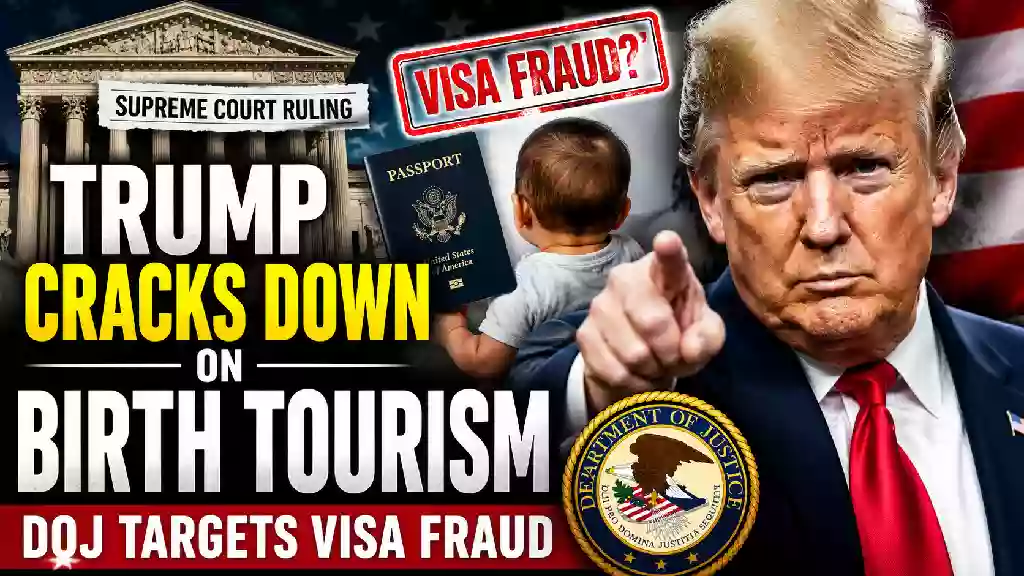
Trump administration signals tougher enforcement against birth tourism and alleged visa fraud following a Supreme Court ruling on birthright citizenship.
Trump Administration Steps Up Birth Tourism Enforcement as Visa Fraud Comes Under Scrutiny
Trump Administration Targets Birth Tourism With Tougher Visa Fraud Enforcement After Supreme Court Ruling
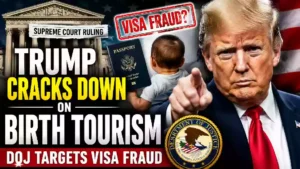
The Trump administration is turning its attention to birth tourism and visa fraud, signaling a tougher approach toward foreign nationals who allegedly travel to the United States under false pretenses to give birth and potentially secure U.S. citizenship for their children.
The renewed enforcement push comes after a recent Supreme Court decision involving birthright citizenship, which created limits on how far the administration could go through executive action. Rather than relying solely on changes to citizenship policy, the administration is looking toward immigration laws that are already on the books.
Legal analysts cited in the discussion say one of the most straightforward enforcement tools involves cases where individuals allegedly misrepresent the purpose of their U.S. visa applications.
DOJ Focuses on Alleged Visa Fraud
The Department of Justice is expected to take a more aggressive approach toward cases involving fraudulent visa applications.
According to Fox News legal editor Kerry Irvine, federal authorities can pursue individuals who allegedly lie about the purpose of their trip when applying for a visa. If someone claims they are entering the United States for one reason while their actual purpose is to give birth, that alleged misrepresentation could create a basis for criminal enforcement.
The distinction is significant because it allows federal authorities to target alleged misconduct without necessarily resolving the broader constitutional debate over birthright citizenship.
The source points to a 2024 case in which a husband and wife were sentenced to 41 months in prison for operating what authorities described as a birth tourism business. The couple allegedly helped women obtain visas fraudulently and arranged housing for them after they arrived in the United States.
Birth Tourism Has Drawn Federal Attention
Birth tourism has become a controversial issue in the broader U.S. immigration debate.
The practice generally refers to foreign nationals traveling to the United States to give birth, with the expectation that their child could receive U.S. citizenship under the country’s birthright citizenship framework.
The source describes allegations involving organized operations in states including California and Florida, where women were reportedly provided accommodations during their pregnancies. Such allegations have fueled calls for stronger enforcement against businesses and individuals accused of exploiting U.S. immigration and visa rules.
Supporters of tougher enforcement argue that deliberately providing false information to obtain a visa is fundamentally different from simply exercising a legal right after entering the country.
Supreme Court Decision Leaves Broader Questions Unresolved
The Supreme Court ruling has added another layer to the debate.
The American Civil Liberties Union (ACLU) has argued that birthright citizenship is protected by the Constitution and that an executive order cannot simply change its meaning. The organization has indicated that attempts to rewrite birthright citizenship through executive action would face legal challenges.
At the same time, the source notes that the Supreme Court decision left a potential pathway for Congress to address the issue through legislation.
The case was decided by a narrow 5-4 margin on the constitutional question. Justice Brett Kavanaugh wrote separately, agreeing with the existing application of birthright citizenship but focusing his reasoning on the statute involved rather than declaring that Congress could never change the underlying law.
That distinction could become important if lawmakers attempt to take up the issue in the future.
Executive Order Faces Potential Legal Challenges
The administration’s broader executive order could also face additional court challenges over how certain categories are defined.
The source highlights provisions involving diplomatic personnel and individuals associated with foreign terrorist organizations. Some restrictions already exist under constitutional or federal law, while the administration’s order reportedly seeks to expand certain categories.
Those provisions could become another battleground between the administration and immigration advocacy organizations.
The legal challenges could ultimately determine how much authority the executive branch has to interpret or expand existing exceptions to birthright citizenship.
Immigration Enforcement Becomes the Key Battleground
For the Trump administration, the fight over birth tourism appears increasingly connected to immigration enforcement, visa fraud and the interpretation of existing federal law.
The administration may not need to immediately resolve the larger constitutional debate to take action against individuals who allegedly obtain visas through deception. Existing laws provide federal prosecutors with potential tools to pursue cases involving fraudulent applications and misrepresentation.
At the same time, civil liberties groups are expected to continue challenging efforts that they believe improperly restrict constitutionally protected citizenship rights.
The result is likely to be an ongoing legal and political battle over where the government’s authority ends and constitutional protections begin.
As the Trump administration increases its focus on birth tourism and immigration enforcement, the next major developments could come from federal courts, the Department of Justice and Congress. The debate over birthright citizenship is therefore far from settled, with visa fraud enforcement emerging as one of the administration’s most immediate tools.
#DonaldTrump #TrumpAdministration #BirthTourism #BirthrightCitizenship #SCOTUS #SupremeCourt #DOJ #VisaFraud #Immigration #ImmigrationEnforcement