Senate Committee Advances Fauci Contempt Referral as Rand Paul Takes Unconventional Path to DOJ
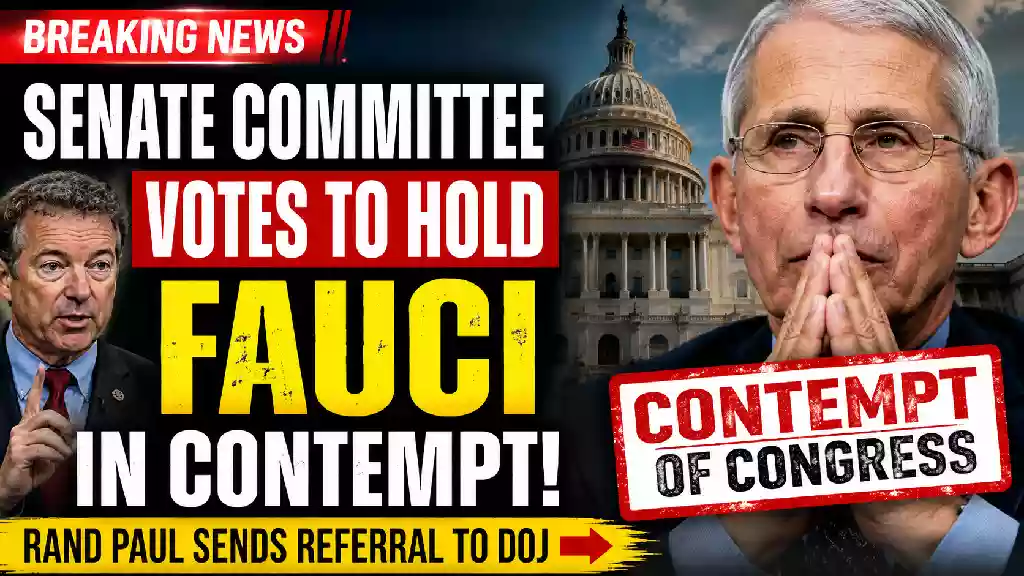
Sen. Rand Paul and Dr. Anthony Fauci are featured in a breaking news YouTube thumbnail illustrating the Senate committee's vote to approve a contempt referral against Fauci and send the matter to the U.S. Department of Justice.
Senate Committee Advances Fauci Contempt Referral as Rand Paul Takes Unconventional Path to DOJ
Rand Paul Sends Anthony Fauci Contempt Referral to DOJ Following Party-Line Senate Committee Vote
A Senate committee has voted along party lines to recommend holding former White House COVID-19 adviser Dr. Anthony Fauci in contempt of Congress, escalating an ongoing dispute over his recent congressional testimony. Rather than seeking approval from the full Senate, Committee Chairman Sen. Rand Paul announced he will forward the referral directly to the U.S. Department of Justice (DOJ), setting up an unusual legal and procedural test.
The committee’s decision follows Fauci’s appearance before lawmakers last week, during which he invoked his Fifth Amendment right against self-incrimination more than 100 times. Republican members contend that a pardon previously granted by former President Joe Biden removed Fauci’s legal basis for declining to answer questions, while Democrats dispute that interpretation and argue the referral could weaken future congressional oversight.
Committee Approves Contempt Referral
The Senate committee approved the contempt referral by an 8-7 party-line vote, with Republicans supporting the measure and Democrats voting against it. The vote came after Fauci repeatedly declined to answer questions during the hearing, prompting Republican lawmakers to argue that Congress had been denied testimony they believe is essential to its investigation.
Instead of bringing the matter before the full Senate, Paul announced that he intends to send the referral directly to the Department of Justice for possible prosecution.
Rand Paul Defends Direct Referral
According to the source material, Paul argued that Congress and the American people deserve answers regarding federal funding for research involving the Wuhan Institute of Virology and Fauci’s role in overseeing or approving that research.
By bypassing a full Senate vote, Paul is taking a less traditional route. Normally, contempt referrals receive approval from the full legislative chamber before being forwarded to the Justice Department. Supporters say the move avoids procedural obstacles, while critics argue it departs from longstanding congressional practice.
Democrats Raise Concerns Over Congressional Precedent
Democratic members of the committee opposed the referral, warning that the process could establish a precedent affecting future congressional investigations.
The committee’s top Democrat argued that if committees begin referring witnesses for contempt without following traditional procedures, future witnesses could become more reluctant to cooperate with congressional oversight. Democrats also questioned whether the Justice Department would pursue prosecution under these circumstances, noting that the referral does not follow the customary legislative process.
DOJ Will Decide Whether to Pursue the Referral
Although the committee approved the referral, the Department of Justice is under no obligation to file criminal charges.
The source highlights previous instances in which contempt referrals produced different outcomes. In 2008, the Democratic-controlled House referred former White House Counsel Harriet Miers to the DOJ, but the Bush administration declined prosecution.
More recently, Steve Bannon and Peter Navarro were prosecuted after contempt referrals connected to the House investigation into the January 6 Capitol attack, demonstrating that DOJ decisions vary depending on the facts and legal circumstances surrounding each case.
Historical Cases Shape the Debate
Lawmakers also referenced several past legal precedents during the committee debate.
The report notes that former Major League Baseball star Roger Clemens faced prosecution following a bipartisan congressional referral over allegations that he lied under oath, although he was ultimately acquitted.
Sen. Josh Hawley also cited the 1896 Supreme Court case Brown v. Walker, which addressed circumstances involving compelled testimony after immunity is granted. Hawley argued that the decision supports requiring testimony in certain situations, though whether that precedent applies to Fauci’s circumstances remains an unresolved legal question.
What Comes Next?
The fate of the referral now rests with the Department of Justice, which will determine whether to review the committee’s request and decide if any further legal action is appropriate.
Regardless of the DOJ’s decision, the dispute has renewed debate over congressional oversight, the limits of the Fifth Amendment, and the procedures Congress should follow when witnesses refuse to answer lawmakers’ questions.
The committee’s action marks another chapter in the continuing political and legal debate surrounding the government’s response to the COVID-19 pandemic and congressional efforts to examine decisions made during that period.
#AnthonyFauci #RandPaul #Congress #Senate #DOJ #BreakingNews #Politics #CapitolHill #FifthAmendment #CongressionalOversight